


Selfless service under the constant threat of death
Editor’s note: In Neale Bayly’s summer/fall series, “Solo Moto“, he recounts his life-changing 5-week motorcycle trip around Ukraine in 2023. That trip changed his life in profound ways, and sent Neale off in new directions with his Wellspring International Outreach foundation. In this story, Neale introduces Yulia, a young mother who fled the front lines of the war, and now returns to bring food and aid to those trapped within it.
“They said don’t go to the protests. It’s too dangerous. I asked them why because I live in a free country. They told me to think about my children. Then one day they started to shoot people from the protests. They also locked up others and tortured them. My friend Roman was imprisoned and tortured for 54 days.”
Yulia Gladkaya takes a pause and I look out of the car window. Watching the blue sky as we glide by, the horizontal blur of the low hedges frames the vast expanse of farmland we are passing. Close to the Moldovan border now, some of the tension from Odesa melts as it feels safer away from the city, with it’s constant air alerts and missile strikes. We are on our way to bring food and aid to struggling Roma families in a small rural community, specifically, two single mothers with large numbers of children.
In my head, I’m trying to process how a young lady who fled her home in Kherson during the occupation with her children, escaping with little more than the clothes on their backs, is now working to help so many others. Less than a year since she left the occupied territories, Yulia is working for not just marginalized people, but internally displaced people, young and old. She is also assisting with the care of orphans.
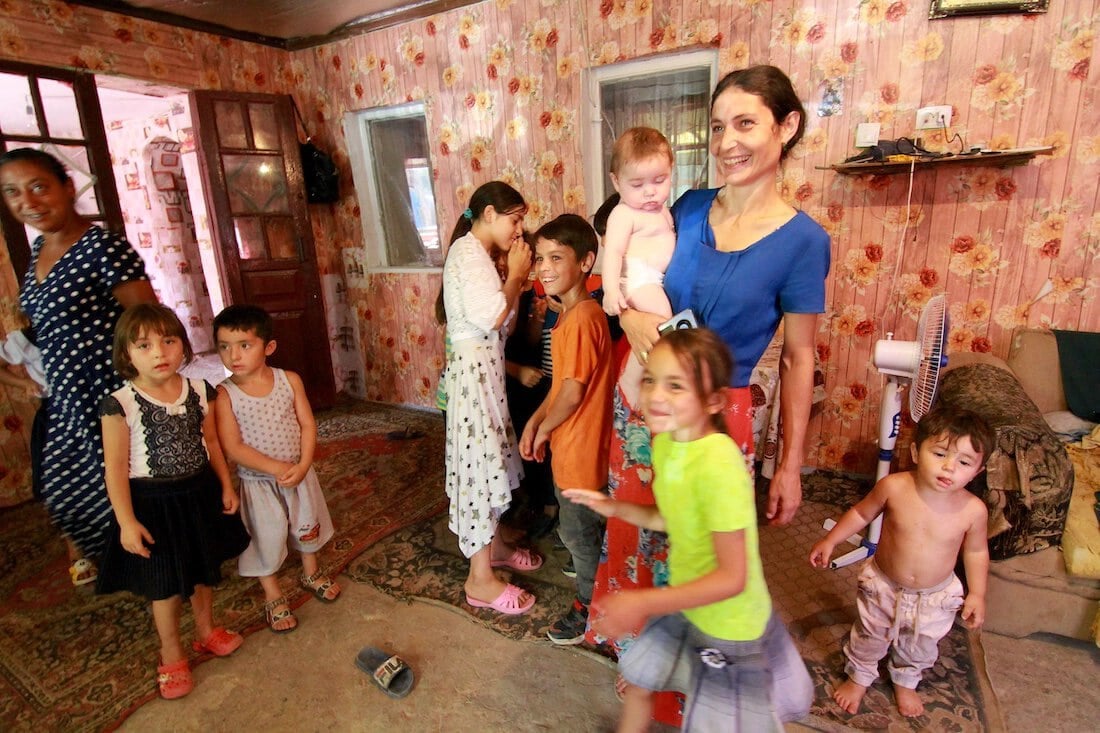
One of the many families trapped in the occupation zone, that Yulia seeks to help.
Yulia Gladkaya is 34 years old and lives in Odesa with her two sons, Constantine and Ruslan. Their father, Annotoli, is working in Germany. She was born in Kherson, lost both her parents as a young child and has one older brother. Her husband is also from the Kherson region.
Before the full-scale invasion, she worked for a digital marketing agency that organized women’s events. Yulia also worked as a business and lifestyle coach on social media in her spare time and was a very popular Instagram influencer. “Before war I can have all I want. A new telephone. Travel. Fun. Then the full-scale war came. We didn’t believe it during the first hours, but then I saw smoke from the Chornobaivka Airport and heard explosions from the attack that began at 4:15 am, February 24, 2022. I thought in one or two days, it will be finished and they will go home. Then after four days I saw a Russian soldier and we learned of the fight for the Antonovsky Bridge.”
I discovered from Yulia that many men and boys tried to defend that bridge. Most of them were ill-equipped and the Russians destroyed them before entering the city. She then told me, “We can’t believe it. People didn’t want to dress, go out and wear any clothing with the Russian letter Z, so New Balance shoes were gone.” By March 1st, Kherson was fully occupied.
Immediately Yulia volunteered to drive to Odesa for food and medical supplies. In those early days of the war, she made the journey four times and would tell the Russians at the check points, “I am for peace.” Yulia was having a hard time finding diabetic medication for people and grew very angry. “I wanted to stay because it’s my home.” By this time Yulia was afraid to go out on the streets, and the imprisonment and torture of Kherson’s citizens began as the Russians shut down the cell signal and internet. Yulia lost connection with the outside world.
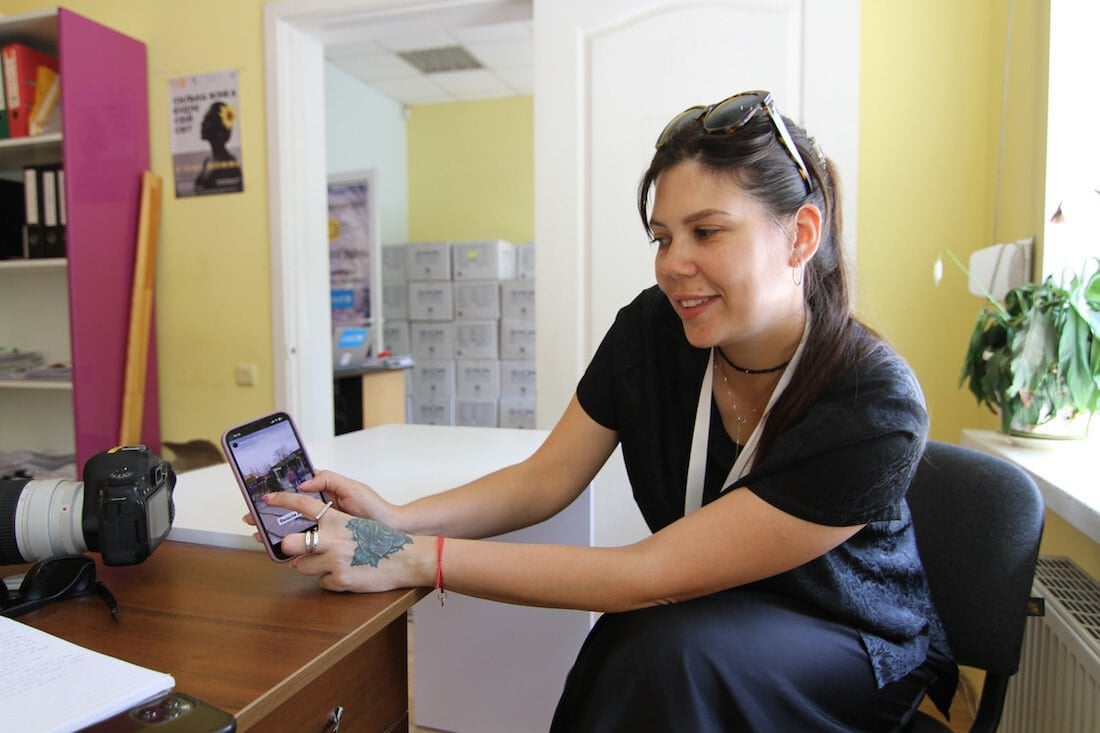
Yulia at Winds of Change HQ, sharing photos from one of their recent excursions into occupied territory.
Finally, after some time it was possible to buy a Russian phone card and she could communicate outside. “It sucked,” she told me, but after a while they were able to get Starlink. “We played games, spoke with friends and neighbors and I volunteered.” I asked her if she thought the Russians would hurt her and she told me she couldn’t think about that.
After some time, Yulia couldn’t make any more trips. Food was running out in Kherson and the Russians started selling their food. “It was really bad. Very salty and the kids wouldn’t eat the ice cream.” With her home being in close proximity to a Russian checkpoint, Yulia found herself being harassed by Russian soldiers on a daily basis. “Why do you love Ukraine so much?” they would taunt her. They were forbidden from speaking Ukrainian and watching the soldiers hassling old people. It became clear no one would be leaving. “I had to think about my children, my job, housing and such,” when she received a phone call from a foundation helping people leave Kherson.
The decision was made.
Yulia and the kids stuffed as much as they could into backpacks, took a kilo of buckwheat, and walked out of their home. Making their way to a village near the last check point, Vasilyevka, there were more than a thousand cars in line waiting to leave when they arrived. Yulia spent her days in a friend’s car that was in the line, and at night was able to find shelter for her and the boys at a local school. The days brought fear, because the Russians stole lap tops, phones and money. Some people were able to pay to jump the line, but most were waiting at least five days. There were many women and small children, with one woman giving birth while waiting in the line.
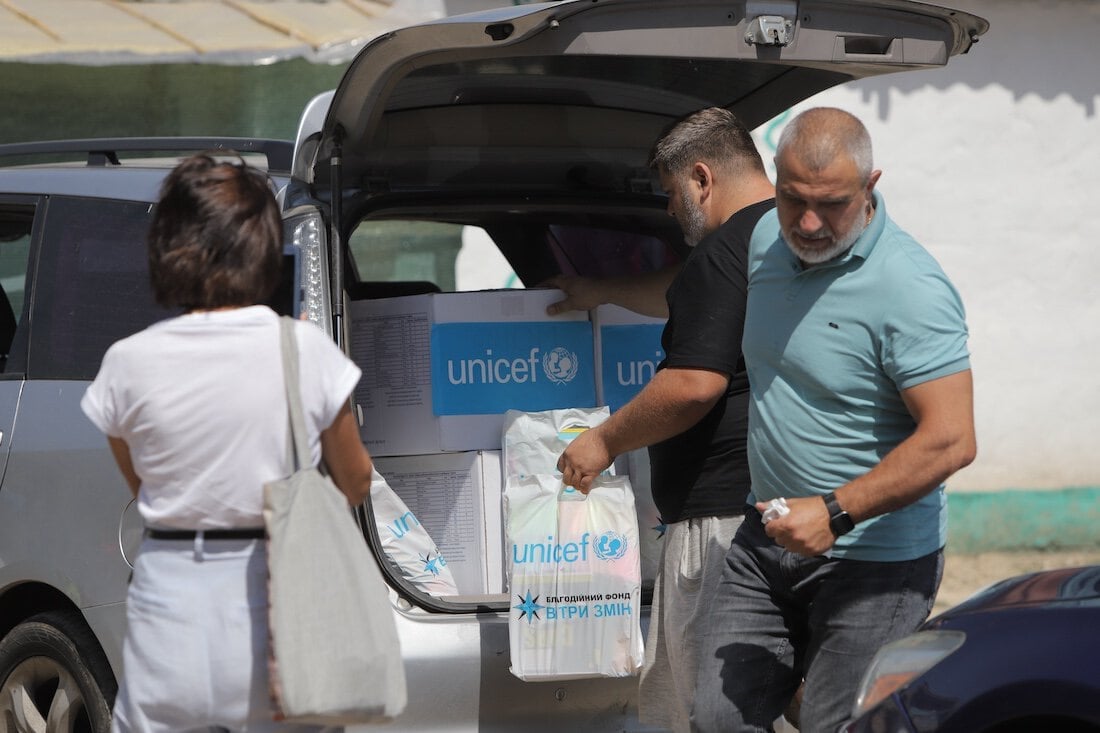
Winds of Change team members delivering supplies from UNICEF.
On the fifth day there were just 60 cars left, her friend’s being 48th in line, and she felt they would be okay. Then the soldiers starting searching everyone’s clothes and began taking money and more electronics. Fortunately, Yulia’s money was well hidden, but not her friend’s iPad. It was a worrying time for everyone as the occupiers searched everyone’s phones for anything anti-Russian. Apparently, when the Russians first invaded, most had no idea how to operate a smart phone, but quickly started employing a device to download any stored information. This made it extremely dangerous because Yulia told me even if you delete your messages in the trash folder they can be retrieved. Even to use their native Ukrainian language would have caused big trouble.
With horrific stories of women and children being killed at such check points and after five stressful days of waiting, Yulia and her boys finally were out of Kherson and heading to Odesa. “I should have got out earlier, and I believe God saved me.”
They stayed in a relative’s apartment during the first days and Yulia would take walks to the sea. The beach was closed with barbed wire, and was also heavily mined, which meant she couldn’t get close. She just needed to see the water. “What must I do?” she asked herself, and went to find some help and assistance at a local aid organization called Winds of Change. Entering into a conversation with Natalia, the head of the organization, Yulia was asked about her previous employment and was hired on the spot.
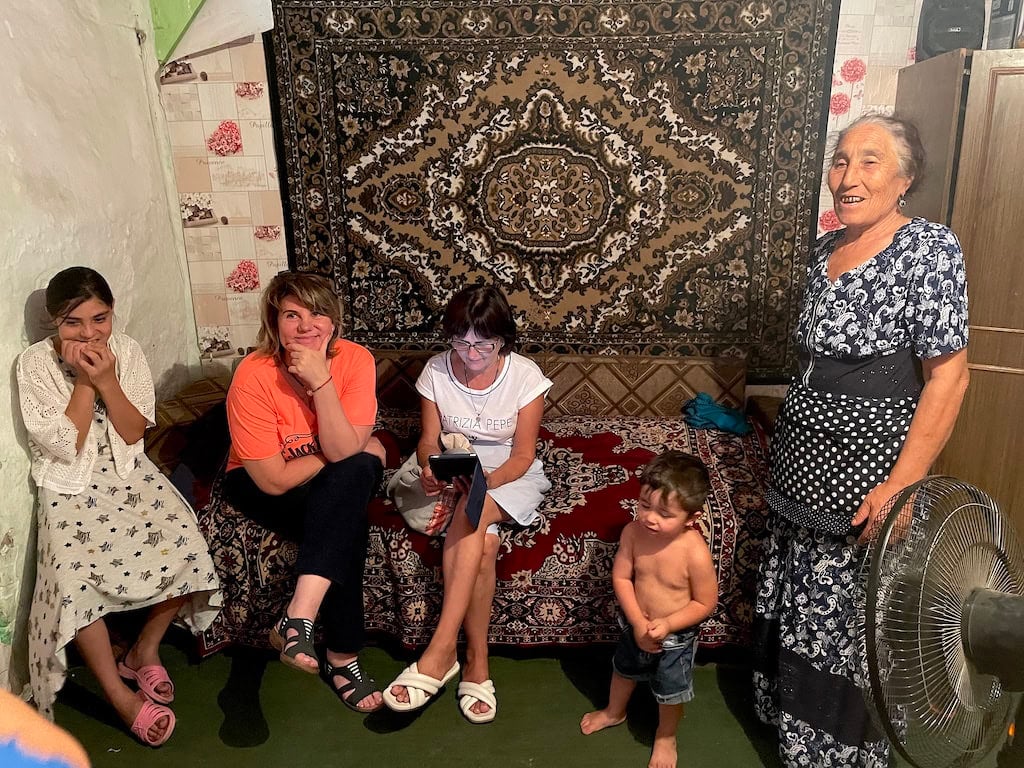
Aid workers spending some time with a Roma family near the front.
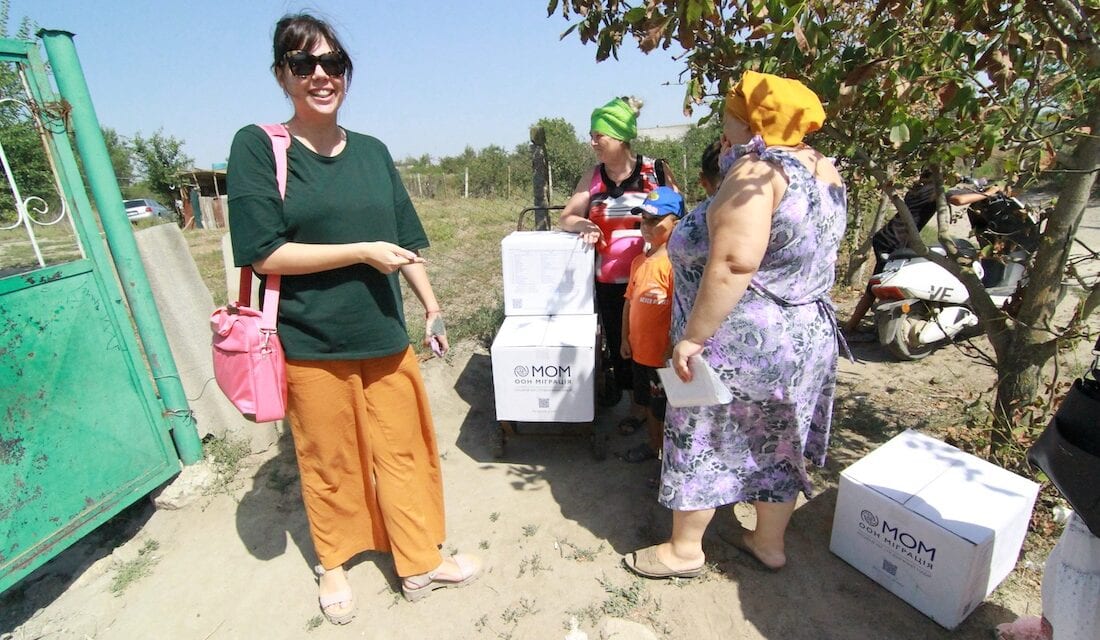
A year later, Yulia is an integral part of the team and as we enter the house of a Roma lady with thirteen children, I make ready to spend the rest of my day documenting her work. Organizing the distribution of food, aid and products for small children and babies, each step has a procedure and paperwork. Yulia works calmly and efficiently, in what to me is a chaotic environment, and it seems the whole village has turned out for a visit. For a time, we watch two of the children perform some traditional Roma dancing.
During our day we visit with two families to distribute aid before heading back to Odesa. Once back at headquarters, I’m given a tour of their facilities. There I meet a recently displaced mother and child, before I’m shown where the ceiling collapsed in a child’s bedroom from the last rocket attack.
In this peaceful area they have created featuring office space, temporary accommodations and a classroom, we hear the air strike warnings howling across Odesa. Yulia hugs me and we say our goodbyes. I start walking back to my hotel deep in thought. This brave lady endured occupation, then escaped, and now devotes herself to those less fortunate with no guarantee of her own safety, as the ongoing war rages.
Neale
For info on how you can help Neale support work like Yulia’s in Ukraine, as well as his other projects, click here:




















0 Comments