

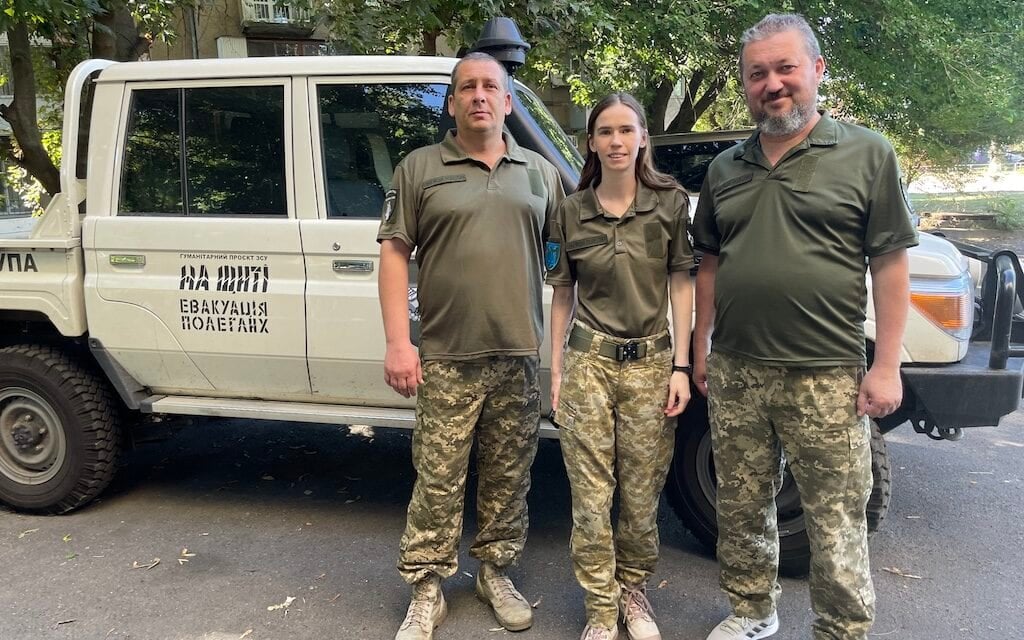

A somber but important work
Editor’s note: In Neale Bayly’s summer/fall series, “Solo Moto“, he recounts his life-changing 5-week motorcycle trip around Ukraine in 2023. That trip changed his life in profound ways, and sent Neale off in new directions with his Wellspring International Outreach foundation. In this story, Neale introduces Memory and Glory, an organization that recovers the bodies of fallen soldiers and civilians from the front lines, to help provide closure for their grieving families.
Closer now we sit, as if the arrival of dusk, then night, draws us closer. Imperceptibly the light leaves the carriage as the train rolls steadily west, the plumes of black smoke from the Russian artillery as they mass troops on the border now long behind us in Kramatorsk. As we talk in the shadows, I feel her knee touch mine and I instinctively reach out and hold her hand, wanting all the love and energy from my soul to flow into her and take away the pain.
Why? Why are they killing us? These sudden outbursts of anger, frustration and despair cause her to stare into the half-light, physically vibrating from the hatred inside that is unable to escape. The swirling maelstrom of vitriol becoming a supernatural demon that is possessing this sweet, bright and energetic young lady. Then it’s over, and she is back, in the way I’ve seen soldiers wounded in battle leave the moment and return during similar conversations.
With the clacking and whooshing of the train the only sounds now, I’m left feeling powerless, adrift in my own sea of despair at my inability to say or do anything to help. So I listen. I listen with every ounce of my being, every thought, feeling or emotion that forms my existence gone. I’m an empty vessel, sitting in the dark absorbing her pain as she pours the contents of her heart into mine.
Sometime earlier, as we prepared for the eighteen-hour train journey to Lviv, Irena helped us find food and water while settling into the sleeper carriage we were sharing. After exchanging the usual traveler pleasantries, I asked her, “Is everyone in your family ok?” The gut punch, the sudden silence as the train rolled west into the late afternoon took my breath away as she told me her husband had been killed. My travel partner, Gordon, was messaging his family as the soldier in the opposite bunk lay with his eyes closed, ear buds in, either sleeping or deep in his own personal thoughts. Left alone, Irena began to tell me the story on the day that would have been his birthday.
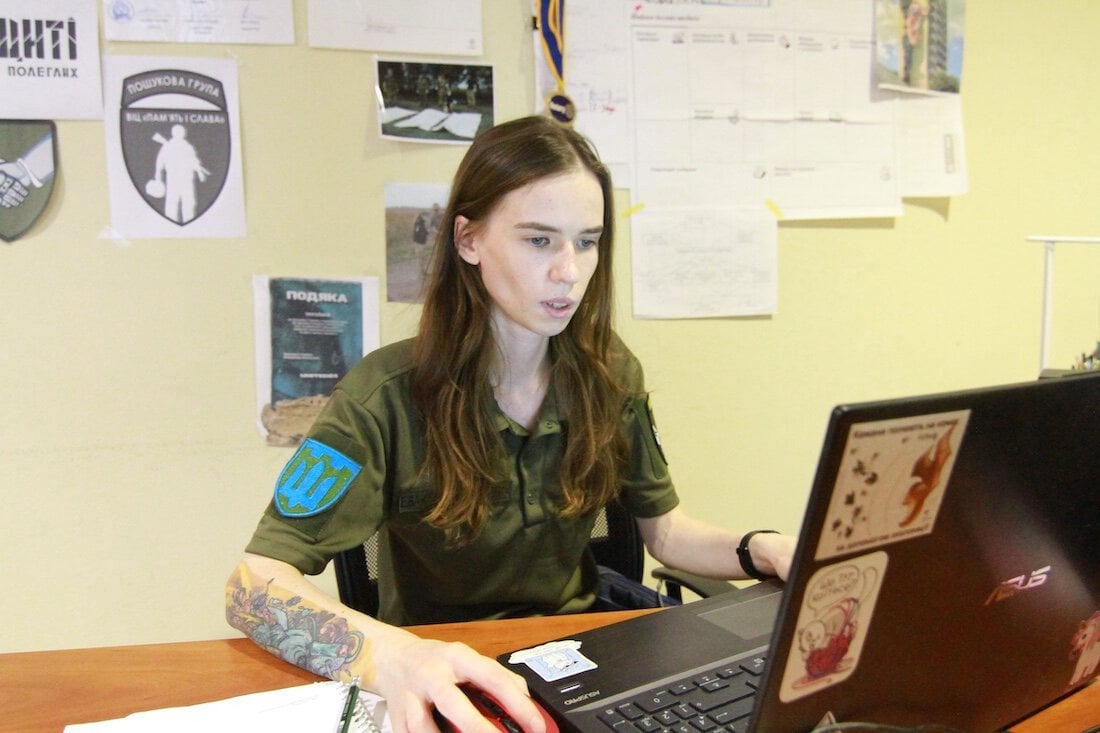
Kate Rotarenko at work in the Odesa Memory and Glory center.
At the start of the war, Irena’s husband immediately signed up to join the military and within a few weeks was fighting on the front lines. Ten days later she got word he was missing, and for the next five months she waited to find out his fate, not knowing if he were dead or alive. Finally, word came through that DNA testing confirmed he had been killed, leaving Irena to raise their two young daughters alone.
The reveal is brutally painful, but for some reason speaking English, not Ukrainian, makes it possible. Over the next hour, I learn about their lives as refugees in Romania, and how she was responsible for her elderly parents, her mother-in-law and children as the only one who spoke English. They moved back to a safer region of Ukraine, but the mind-numbing weeks of waiting, living in hotel rooms, existing on humanitarian aid with nothing to do was exhausting. As a teacher, Irena kept busy working with the children living in the hotel as best she could, but she longed to be home. Finally moving back, they were fortunate their homes were not destroyed but always have to live with the uncertainty and fear of missile attacks that constantly hit their city.
As Irena shares her heart wrenching experience, I learn she is providing council for a friend who is still awaiting confirmation of her missing husband’s fate, and suddenly the human connection to a story I’ve been struggling to write is clear.
Back in that summer of 2023, I met with a team of people in Odesa called “Memory and Glory.” They go to the front lines and recover the fallen heroes, or the often fragmented remains, and bring them home so their families can have certainty and closure. It gives families a chance to bury their dead, say goodbye and attempt to move on with their lives. The often long wait is now over.
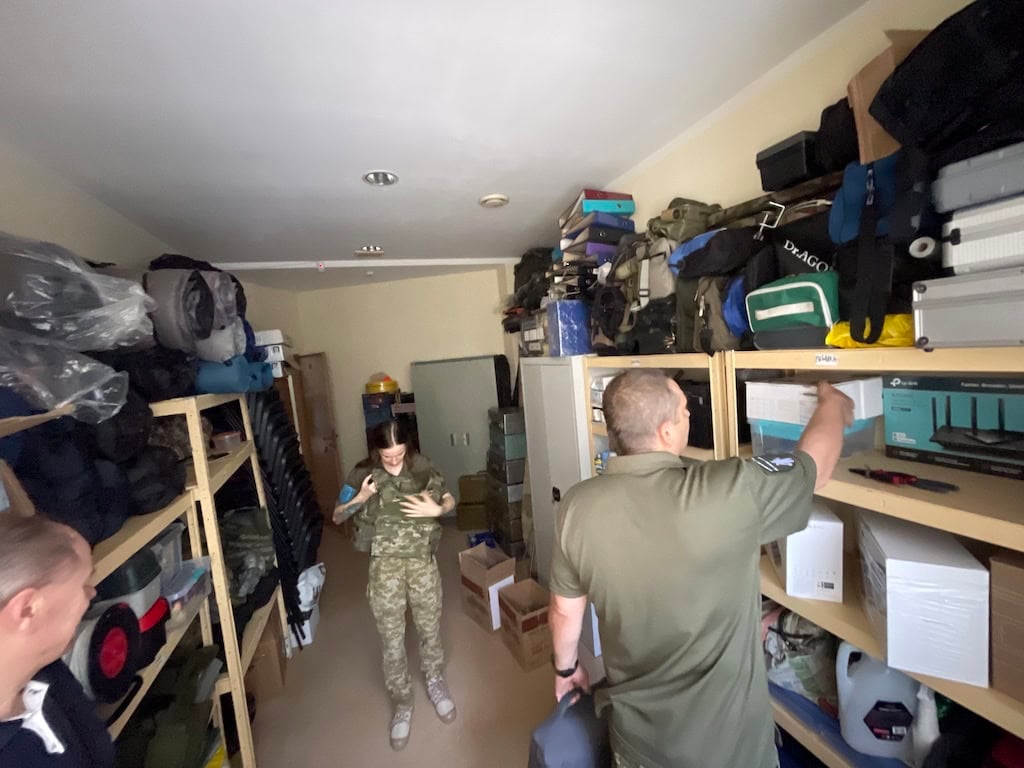
Gearing up for another recovery mission to the front lines.
Kate Rotarenko is around 29 years old, looks as if she might have just left college but presents with a seriousness that only war can bring. Working with ten people in the team, she tells me some are volunteers therefore they are not all full time. The office is basic, with desks and computers set up for her and her team member Leonid Ihnaqtiev, with various pieces of equipment scattered around the room. For at least a month at a time, they go to the front lines to retrieve the fallen soldiers the army has no time to look for. Kate it is not at liberty to discuss numbers, but just one mission can bring back as many as 100 bodies. Not all of the fallen are soldiers, as there are many civilians caught in the middle of this brutal war. They can also bring back Russian soldiers for exchange if they find them, and work with local police forces for documentation of the civilians they find.
The team uses a number of methods to identify the soldiers; name tags, documents, tattoos and even pictures of watches and personal effects supplied by family members of those missing. At times, they have to dig through rubble, or sift through blown up military vehicles. The only way to identify the soldiers in these cases is by DNA testing. With Kate being a Rotary member, they work closely with the Rotary Club of Odesa, who supplied a refrigeration truck to the closest morgue in Kherson or Mykolaiv for processing.
At this point in the war they have just two vehicles, and these need special tires for the difficult conditions they encounter. With each vehicle being driven more than 100,000 miles per year, maintenance is a high priority for the team. Based in Odesa, they are over 250 miles from the front lines so they have to be totally self-sufficient for their extended visits when they leave home base.
Currently, they have one car with three people working in Donetsk, and Kate informs me they have their own generator, water, food and supplies with them. It’s extremely important that they work with military de-miners who clear the roads for them, but they sometimes have to check for mines themselves. Another much needed item on their wanted list is upgraded de-mining equipment. I ask Kate if anyone has been injured and thankfully, she tells me no one in her group. One lady with a dog from another group stepped on a personnel mine and spent four months in recovery. Danger is always close.
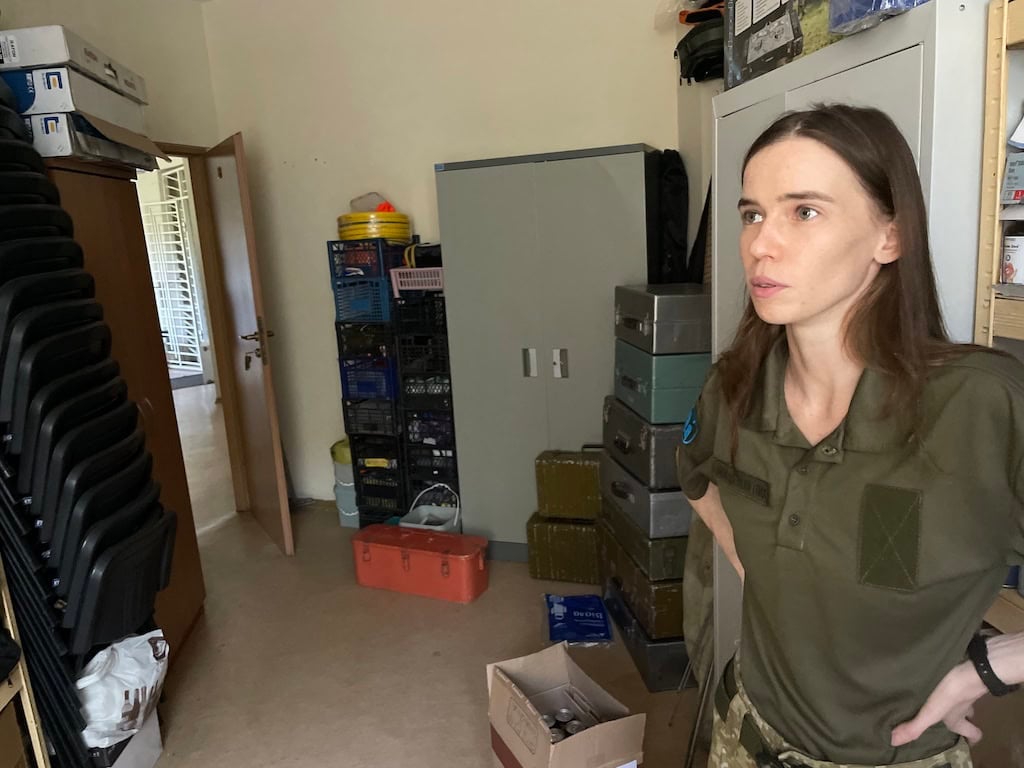
What Kate’s eyes have seen, is difficult to get my heart and mind around.
To hear stories of how they find young men missing for months, and having myself spent the evening with Irena feeling that pain of waiting, it’s taken the hindsight of writing this to really understand the work of Memory and Glory.
Kate makes it clear that the military takes all the visible bodies, but they don’t have the time or resources to search for the missing. During their own searches, Kate tells me they find skeletons, rotting corpses, body parts and bodies in various stages of decomposition from many different types of deaths. Some are burned, some shot or blown up, and one body they showed me a picture of was almost completely burned to the bone, with his boots still on and intact.
To sit with this beautiful, calm young lady as she scrolls through a photo gallery that makes the worst horror movie you’ve watched seem like a children’s show, it’s nearly impossible to imagine how many ways there are to die in a war. How does she and her team deal with dragging all these fallen heroes from the battlefield, putting them in body bags and driving them home month in and month out?
As we conclude our interview, I thank Kate and her guys for the time. I’m once more taken into a world I could never have imagined. I’m with a young lady who should be out having fun with friends, dating, starting a family, not constantly putting her life in danger to perform this brutal and macabre work. I left understanding why she does it, how it’s a much-needed service to the grieving families at home who need closure. It took my time on the train though with Irena, to really feel the massive impact of their work on someone who had waited five months to know the fate of her husband. A grieving lady who is now able to say goodbye.
Neale
To learn more and/or support Neale’s work in Ukraine and beyond, check out his foundation here:





















Oh wow!!!! Thank you to everyone here! This is all more than my heart and mind can wrap around.
Gut-wrenching, Neale. I hear your voice so clearly when I read your words, which somehow makes this even more powerful and painful. You have such a gift for taking us with you, not just to the places you travel, but into the lives and hearts of the people you meet along the way. Irena’s story, and the extraordinary work of Kate and the Memory and Glory team, will stay with me. Thank you for bearing witness and for giving their stories a voice.
The devastation is so horrible and to think there are people who back the aggression and take out Ukraine’s Starlink is beyond comprehension. Neale you wrote this with such grace. Thank you for going there and witnessing all you did for us to see it so clearly.