

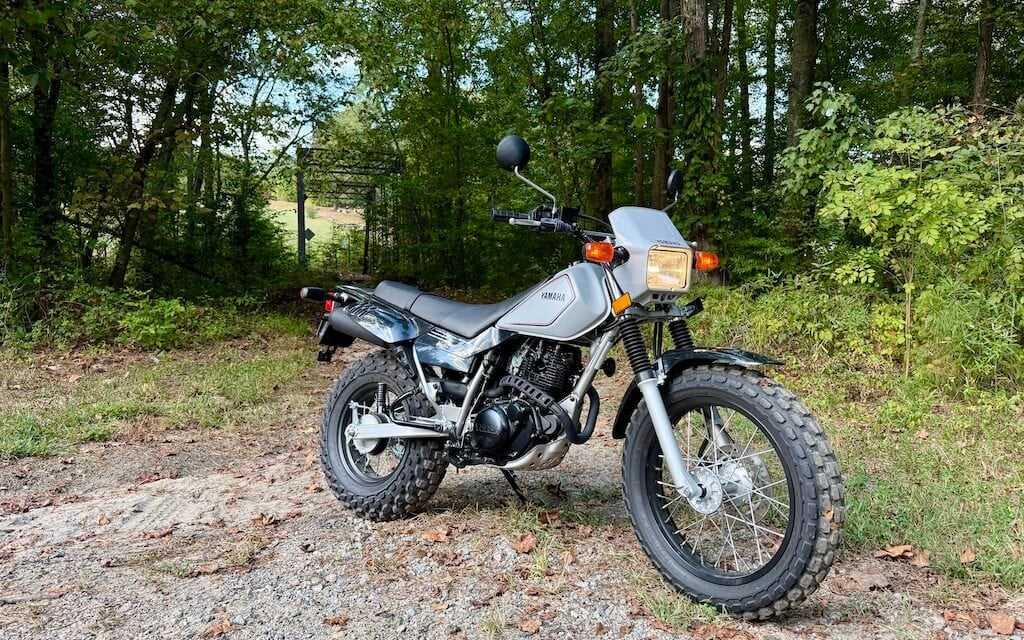

The 40 year old new motorcycle
Deep in Yamaha’s motorcycle lineup, in the dark corners of the brand’s “warehouse”, there resides an anomaly, a time capsule that was never buried, an old workhorse that has never been put out to pasture. Few motorcycles, of any brand, have endured as long as this bike, mostly unchanged. In fact, 2027 will mark the 40th birthday of the TW200, a relic from the past that somehow remains a staple in Yamaha’s pantheon of legendary motorcycles.
Yet the bike remains amazingly popular, a cult favorite with a subgroup of motorcycle riders. Everyone from ranchers and cattlemen, farmers and fieldworkers, to old school enthusiasts who just love the simple, low tech, easy-to-work-on motorcycle like they grew up with. It appears there’s good reason for Yamaha to keep this bike in their lineup, even virtually unchanged all these years. Yes, it’s still carbureted!
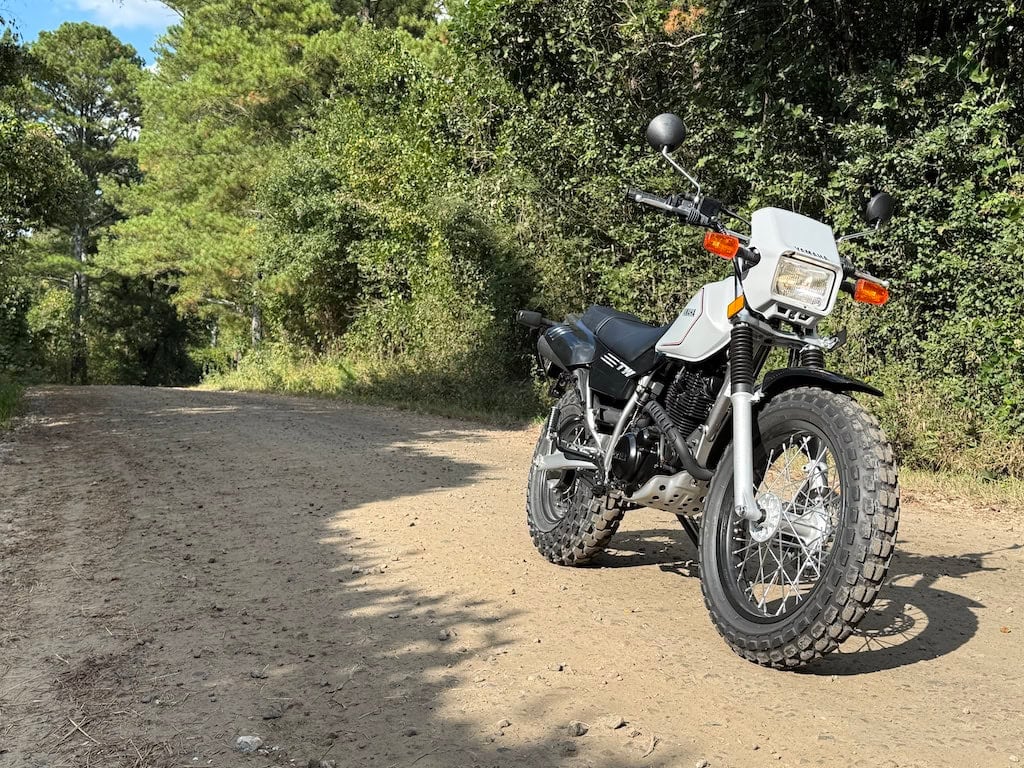
The indomitable “T-Dub”, Yamaha’s little old goat that can.
First introduced in late 1986 as a 1987 model, the TW200 has changed very little since its inception. Besides color scheme changes over the years, the original TW wore a drum brake up front instead of a single disc, and had a kick starter in its early iterations. The original slide style carb was replaced with a CV setup, and the sprockets were slightly modded in the post-90s models, from 14/49 to 14/50. Yamaha has done a few suspension improvements as well. Other than those, there have been few other changes to this little goat on two wheels over the last four decades.
I remember the first time I took notice of a “T-Dub” (as its fans call it), several years ago during a MotoAmerica race weekend at Barber Motorsports Park. A Yamaha rep I’m friends with was buzzing around the park on one from their demo fleet, pulled up next to me and exclaimed, “Rob, you need to check out one of these for Road Dirt! Such a cool, old school kind of bike! I can set you up, man!” It took a few years before I finally bit, and now here we are, late 2026, and I’m wondering why I waited so long to sample one. He was right, it is a cool little bike!
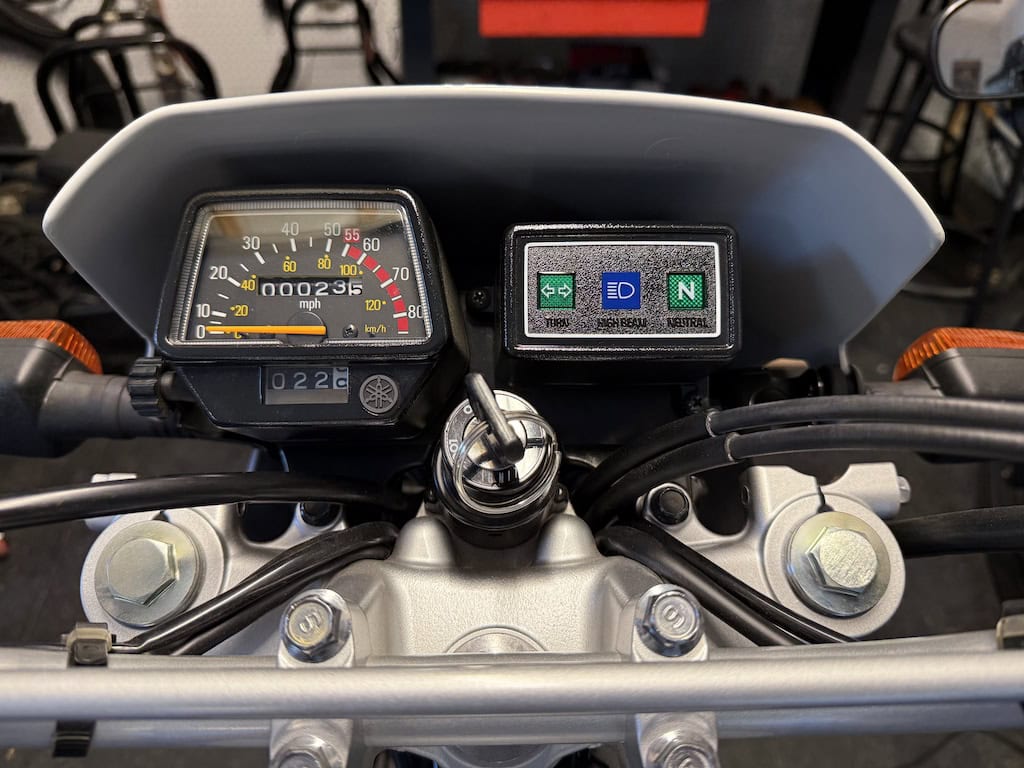
Low tech, uncluttered, unchanged. I like it.
The first elements of the TW (Trail Way) that grab attention are those fat-ass tires. Riding on a pair of Bridgestone Trail Wing TW31 and TW32 knobbies, the front a 130/80-18 and the rear a whopping 180/80-14, these tubed dual sport rubber balloons are unmistakable identifiers of the TW200. They almost make the TW look like a circus clown bike. The next thing I picked up on was the dashboard. No modern TFT digital display, all still 1980s-era analog. Sitting next to my 1978 Kawasaki KZ 650 in the garage, you would think both bikes rolled off similar assembly lines, in both year and tech.
Firing the bike up is also like stepping back in time- Flip the petcock on, pull the choke out two clicks, flip the key and starter switch on, thumb the starter switch, and the TW coughs and wakes up. I was advised by the Yamaha guys to let the little 198cc air-cooled, SOHC, 4-stroke single thumper howl for a minute or two at full choke, before sliding it in one notch to let it further warm up another minute or two. Then, if necessary, adjust the idle control knob, also right down there by the choke and petcock, to get the desired idle. There’s no RPM gauge, so you guess RPM by whatever sounds right to you. “Hmm, that kinda sounds like 1100, I think,…”
Off we go.
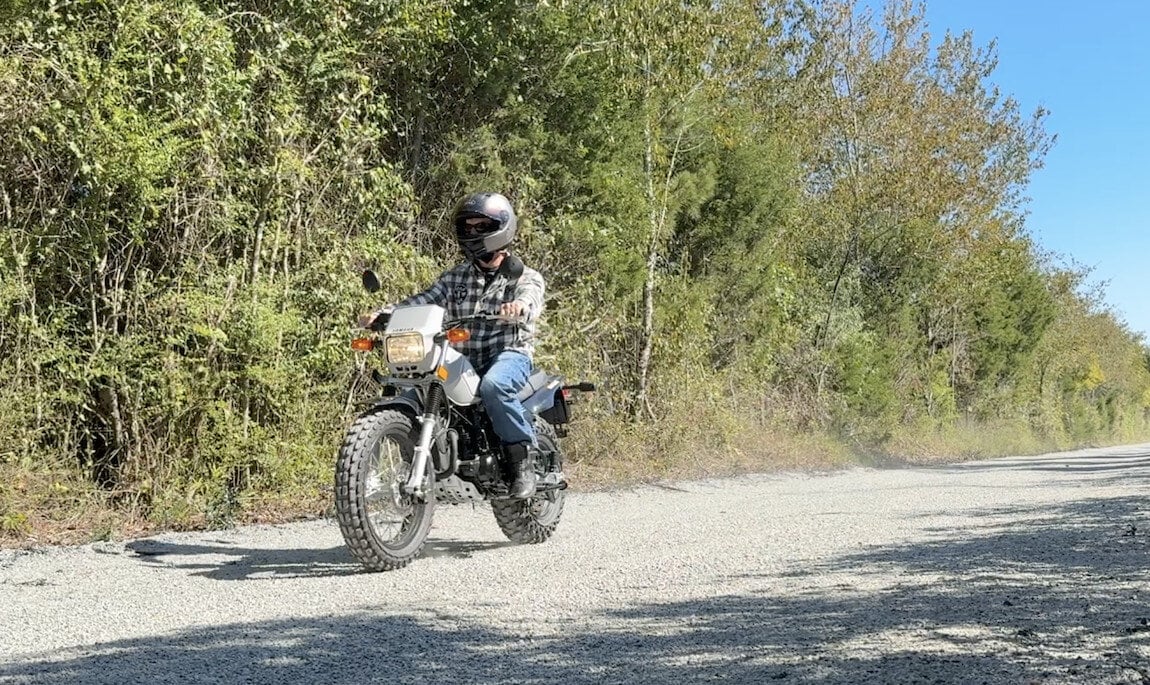
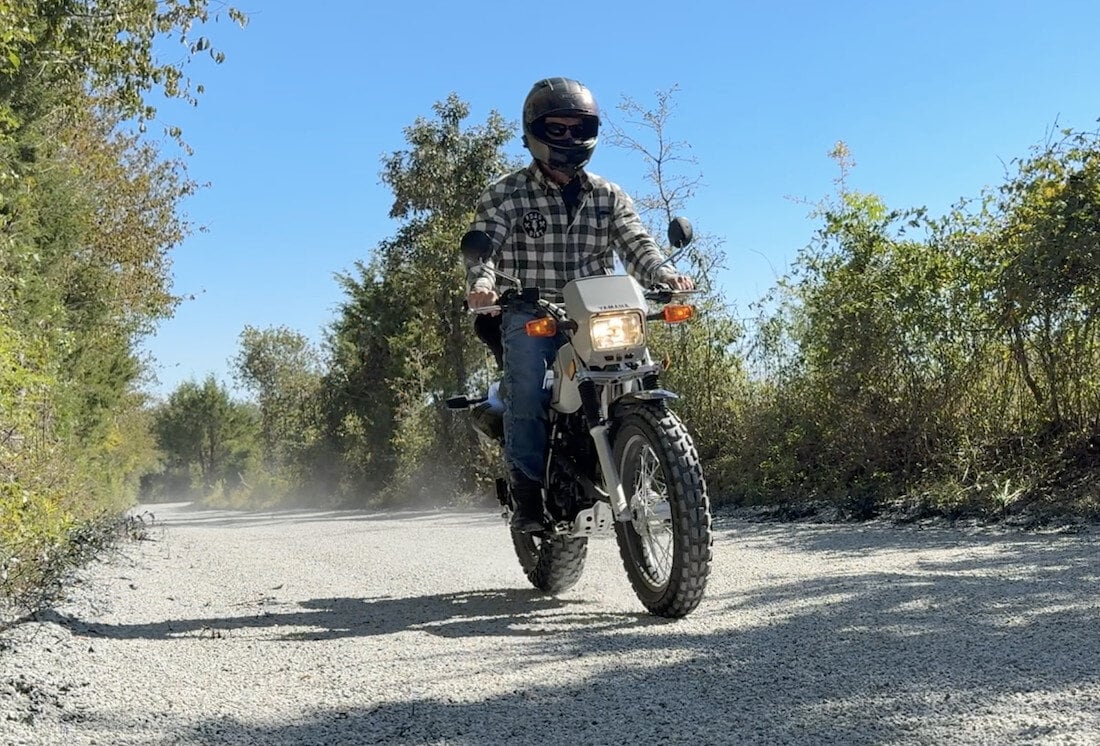
Getting my dirt legs back, on a bike I’m really enjoying.
With a 31-inch seat height, I’m easily flat footing on Yamaha’s living fossil, and I’m already very much at ease on it. The TW makes a minuscule 16 hp at 8000 rpm, and 11 ft lbs of torque at 7000 rpm. Paltry, I know. But the bike is so easy to ride and feels so controlled on and off road. If you want more, you’re looking at the wrong motorbike. The TW200 was/is designed to be approachable, utilitarian, cheap to buy and easy to maintain/repair. This just might be the Swiss Army knife of motorcycles- does nothing outstanding, but everything well. “It just is what it is,” as another Yama rep quipped.
I spent my first couple of weeks with the T-Dub out bombing down county roads and dirt/gravel lanes in the countryside around our northeast Georgia home, getting a good feel for the bike and its capabilities. And my first endorsement comes from that- I have never been super comfortable on dirt, gravel, and sand, usually somewhat reluctant to ride those conditions on any ADV or dual sport we have reviewed. Yet here I am, not only riding off-road, but looking for more unpaved lanes to ride with this bike, I’m enjoying it so much. I can’t believe what I’ve missed all these years, just keeping to pavement. My brothers and I rode dirt bikes and mini bikes as kids, and to be honest, I’m feeling that enthusiasm again on the little TW.
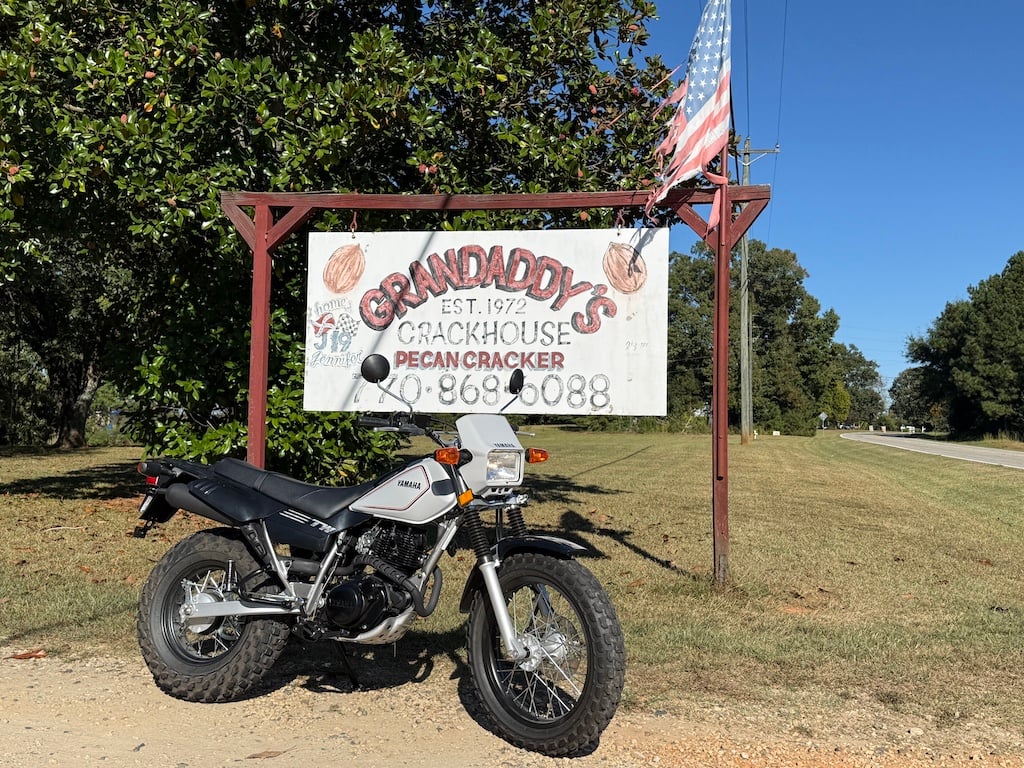
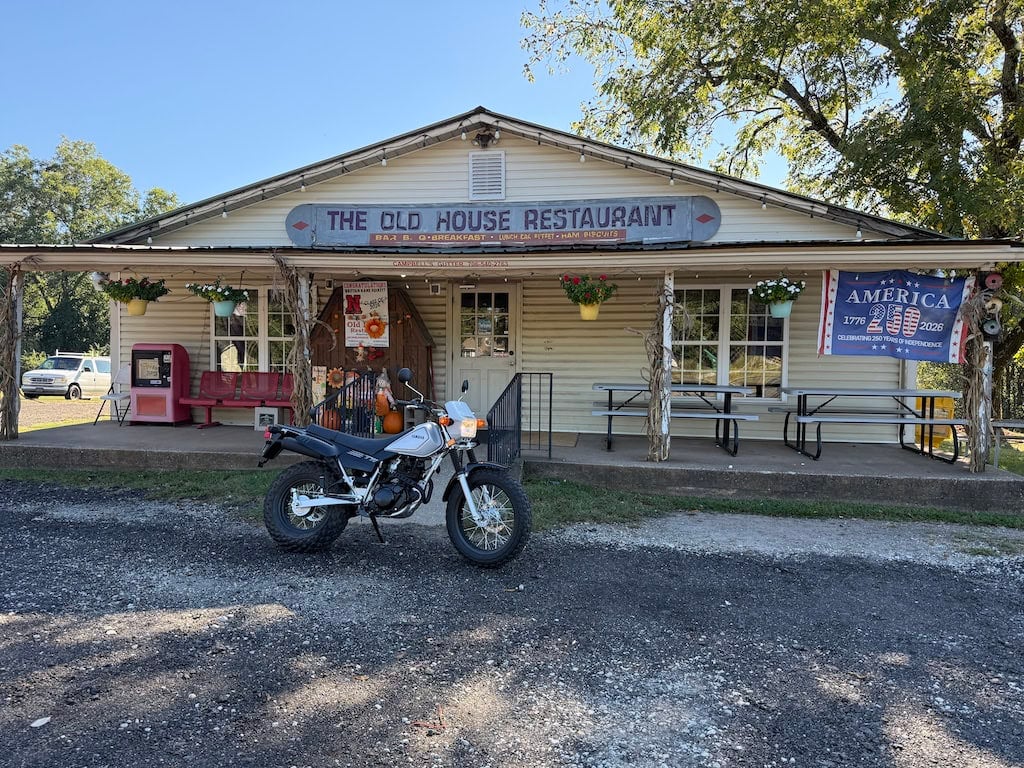
One of Georgia’s oldest pecan cracking stores (the name always cracks me up) in Winder, and serious Southern-fried cooking in Statham.
Yamaha built the TW200 to be tough, hard to break, easy to fix. I read how adventurer Shinji Kazama rode one over the polar ice cap to the North Pole, the year Yamaha started selling them in 1987. That was quite a testimonial to this tough little bike, and a sneak peek at just how enduring this model would become.
My friend Barry at Cycle World of Athens, who is a lifelong and serious off-road rider, loves the TW200 so much, he bought one himself off their own showroom. “I’ve been riding nearly my entire life, everything imaginable, and I just love this motorcycle, had to have one for myself. Get you one, brotha!” After just a couple of weeks of riding this one, I’m about ready to join him.
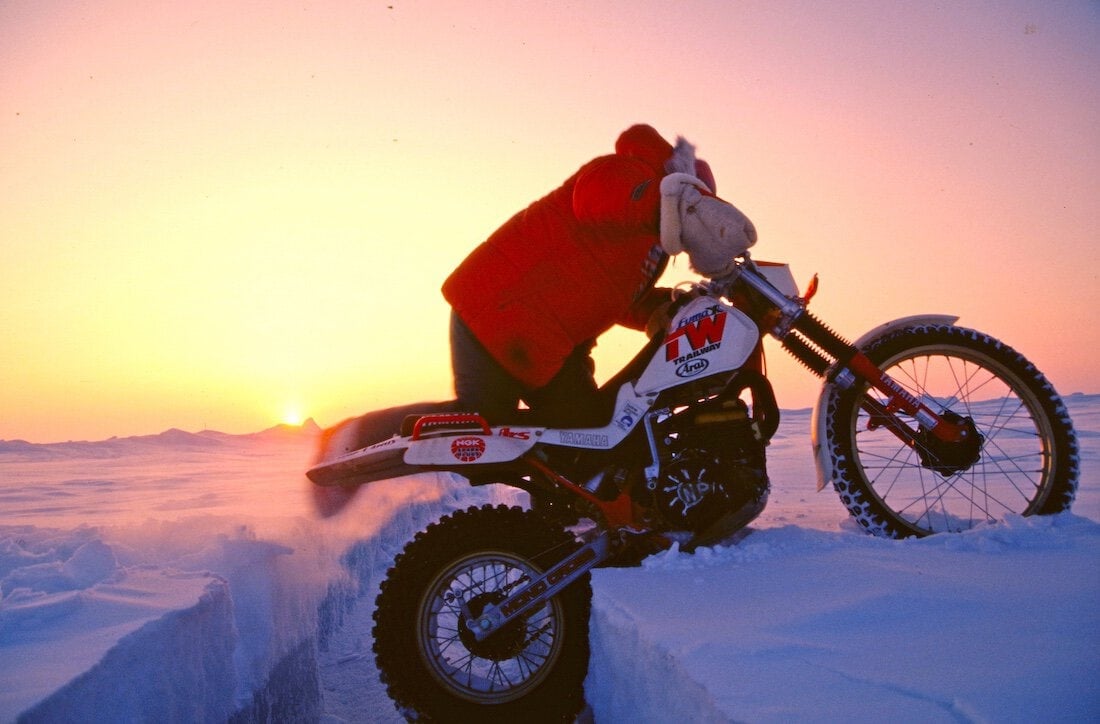
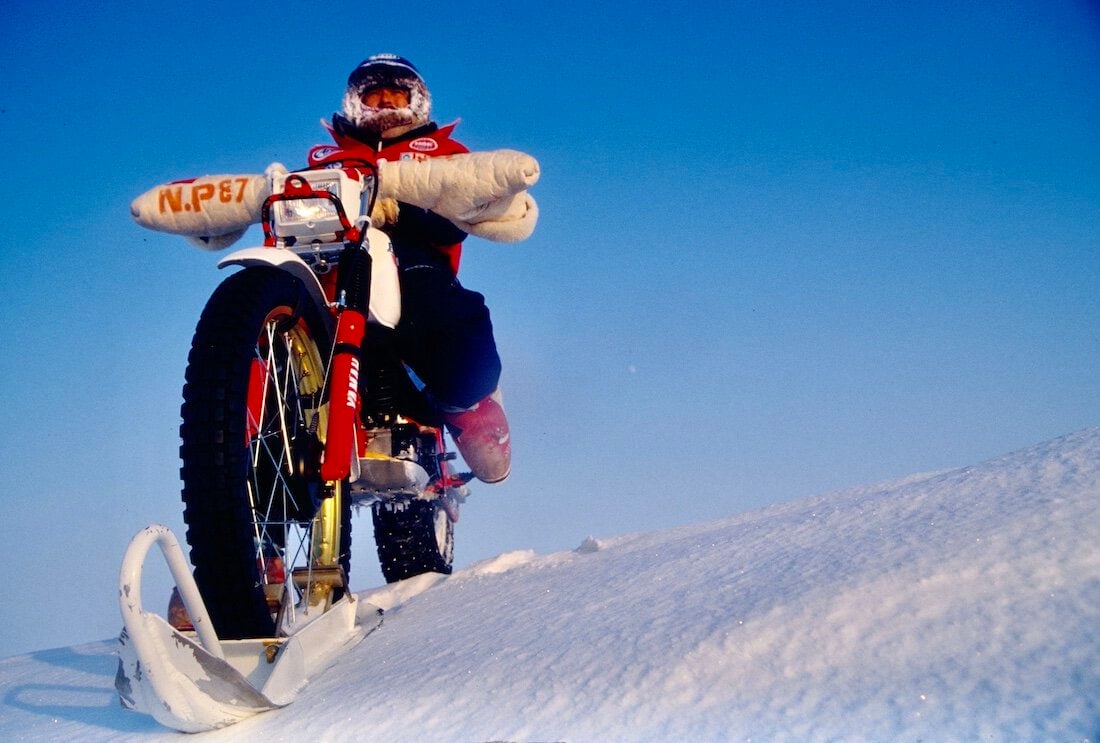
Shinji Kazama making his historic 1987 ride to the North Pole with a TW200. Photos with permission by Hideaki Sato.
We’ve got this motorcycle for a long-termer, so we’ll produce plenty of video and photo content with it. We’ll give it a midpoint review before the end of the year, then conclude with a full wrap-up on it before we send it back to Yamaha. Then again, I may just write a check and send that to them, and ask for the title. This bike might have to find a new home in my garage.
Rob
For more on Yamaha‘s legendary T-Dub, click here:
*Video “first Impressions” review forthcoming…
























0 Comments