

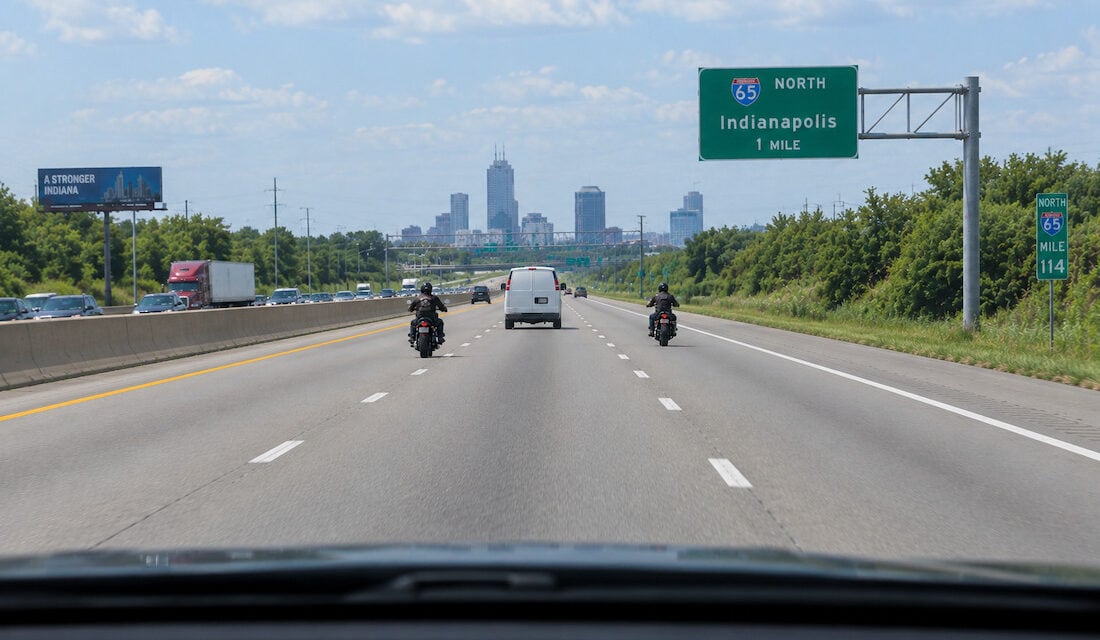

An old adage with a new application
Editor’s Note: From what we can find, this is a fictional story that’s been floating around the interwebs for years. Yet the truth is, the horror of human trafficking is a reality happening all around us, every day. The lesson is, we all can make a difference. Be observant, take action, involve the law. Don’t look the other way. You just might save a child’s, a woman’s, or a senior’s life.
A white cargo van had sat in the lot for twenty minutes, the driver never coming in or getting out to stretch, just hands on the wheel, staring at nothing. Then a side door cracked open about two inches and one tiny finger hooked over the edge, like someone inside pushing without the strength. The driver’s hand shot back and slammed it so hard the van rocked.
My brother Tank stood up so fast he knocked his coffee across the table. I grabbed his arm: spook this guy and whoever is in that van is gone forever. We paid, walked out slow, got on our bikes, and waited. When the van left, we pulled out thirty seconds behind it.
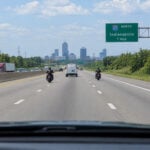
For several hours and 200 miles we were ghosts, swapping lead every twenty miles while I worked my helmet comms, trying to call every road brother riding I-65 that day. By dark there were fourteen of us. He didn’t know it yet, but he was being herded.
When he finally pulled into a truck stop outside Indianapolis to fuel up, Tank walked over, phone recording, and told him to open the cargo door. He said no. Tank didn’t ask twice; he reached past him, took the keys from the ignition, walked around back, and yanked the door open.
The smell I’ll carry to my grave: urine, sweat, and fear, the kind that says nobody inside had been treated like a human in days. I pulled my bandana over my mouth and stepped closer.
Nine kids were packed onto the floor like cargo, oldest maybe 12, youngest no more than 4, wrists and ankles zip-tied, strips of duct tape on the metal floor where their mouths had been covered before the driver pulled it off so they could breathe on the long stretches.
A little girl in a pink shirt with cartoon ponies looked up at me with eyes that didn’t belong on a child, eyes that had stopped expecting good things. I leaned close and she whispered, “Are you going to take us next?”
My knees went weak; Tank’s hand on my shoulder kept me standing.
“No, sweetheart,” I said. “We’re not going to take you anywhere bad. We’re here to get you home.”
She didn’t believe me. She had heard promises before.
Behind me Tank was on with 911 in that calm voice he uses when he’s about to lose his mind: exact location, send everyone, an ambulance for each child.
The driver ran. He got six feet before my biker bro Doc clotheslined him off his feet, and three of us pinned him to the asphalt while he cried that it wasn’t what we thought. Tank knelt, face two inches from his.
“Then what is it?”
He had no answer.
We didn’t beat him, and I want you to know that. Fourteen of us, one of him, nine zip-tied kids in his van, and nobody laid another finger on him after Doc took him down. We sat on him and waited for the cops. Hardest thing I’ve ever done.
While we waited, my brother Reds climbed in with a pocket knife and went one kid at a time, showing each the knife, saying what was coming, cutting wrists, then ankles, never raising his voice. A boy of maybe 6 kept whispering, “I’m sorry, I’m sorry, I’m sorry” as Reds freed him. Reds is a former Marine, two tours in Iraq, a man I’ve seen stare down men twice his size without blinking, and he sat on that floor, pulled the boy into his lap, and wept without a sound, tears in his beard while a child apologized for things that weren’t his fault.
Tank pulled water from his saddlebags, Doc had granola bars, somebody had gum. It wasn’t much. The girl in the pony shirt never let go of my hand.
The first trooper arrived three minutes later, in his late 20s. He looked inside, walked ten feet away, threw up in the grass, then came back and did his job. Within twenty minutes: sheriff’s deputies, state police, two FBI agents, four ambulances. They’d been hunting for that van, among others. The FBI had worked a trafficking case across four states for almost two years, one step behind a network they couldn’t pin down, and we’d just handed them their case.
The kids came out one at a time, paramedics carrying the little ones, the bigger ones on shaking legs. The girl in the pony shirt still wouldn’t let go, so I rode with her; the paramedic saw her hand on my finger and nodded me in.
I’m 61. First motorcycle at 16, three bar fights I’m not proud of, one war I won’t talk about, a wife, a brother, and a daughter buried. I thought I was a hard man. Then that little girl laid her cheek against my leather vest, and I cried like a child in front of two paramedics and a state trooper and I didn’t care who saw.
Tank, 6’4″ with “BORN WILD” tattooed across his knuckles, rode in the second ambulance with a crewcut boy who couldn’t stop shaking. Tank wrapped him in his leather jacket, which hung past the boy’s knees, and kept an arm around him, silent the whole ride. Sometimes that’s all you can do.
The FBI agent in charge, a woman named Reyes, pulled me aside at the hospital three hours later. How did I know? The little finger. The handprint that wasn’t there but the driver who wouldn’t get out. The sweat in 60-degree weather. She shook her head slow, said trained agents would’ve driven right past, and asked what made me follow him 200 miles.
I told her the truth. “Because if it was my granddaughter in that van, I’d want every man on the road to do exactly what we did.”
After a long silence she told me this was bigger than one van, the driver wasn’t the top of anything, that they’d tracked this network two years and we’d just given them their break. By morning the FBI had executed warrants on three properties in two states, arrested seven more, and recovered evidence on a network that had moved children for almost a decade. Some had been missing for months, one almost a year. Their parents got the call that night; some had stopped believing they ever would.
The little girl was Eliza, aged 7, taken from a Walmart parking lot in Tennessee four months earlier while her mother loaded groceries into the trunk. She flew in the next morning, but they wouldn’t let me see Eliza while agents took her statement, so I sat in the waiting room with cold coffee in a paper cup.
Then Eliza saw me through the conference room window, broke from the social worker, ran into the hallway, and wrapped her arms around my leg, face pressed into my jeans.
“Don’t go. Please don’t go.”
Her mother came up behind her, makeup streaked from countless tears, staring at my vest and gray beard and patches. I knelt to Eliza’s level.
“I’m not going anywhere, sweetheart. But your mama is here now. She’s been looking for you every single day for four months. I bet she’s the toughest person you know. Tougher than me.”
Eliza turned and saw her mother for the first time in 127 days, and made a sound I’ll never forget. Not a word. The sound of a child who had given up hope finding it again. Her mother didn’t try to speak; she dropped to her knees in that hallway, pulled her daughter in, and held on like she’d never let go.
Tank was waiting in the parking lot. He handed me a bad vending-machine coffee without a word, and we watched the sun come up over Indianapolis.
The story broke nationally three days later. The driver was some unassuming guy named Donald, 52, of Cleveland; clean record, regular warehouse job, a man his neighbors never suspected. He now faced federal charges that should keep him in prison for the rest of his natural life. The other seven face the same, and the case is ongoing as I write this.
The news called us heroes. Reporters camped at my house for a week; some brothers gave interviews, but I’m not built for cameras. One reporter caught me in my driveway: what would I tell people who see something that doesn’t feel right? I thought of Eliza, her mother on her knees, Tank on the curb with his jacket around a stranger’s child.
“Trust your gut,” I told her. “If something looks wrong, it probably is wrong. And you just might be the one to save them.”
That’s what ran on the evening news. Brothers from three states called that week, all with the same message: “I’m watching now.”
A month later a card came in a child’s handwriting, no return address, just my name and a heart. I opened it at my kitchen table: crayon stick-figure bikers on motorcycles in a row, and a little girl in a pink pony shirt holding one of their hands. Inside, in 2nd grade shaky letters: “Thank you for helping me.”
It rides in the inside pocket of my vest, right next to my heart, everywhere I go.
I’ve ridden hundreds of thousands of miles in my life. I used to think two wheels were only about freedom: the wind, the road, the brothers beside you. Not anymore. We were just a couple of guys at a diner in Kentucky who happened to look out a window at the right moment. We could have looked away, minded our own business, gone back to our biscuits and gravy. We didn’t, and nine kids went home that week because we didn’t.
If you ride, brothers and sisters, ride with your eyes open. There are monsters among us who count on people not paying attention: on our phones at gas pumps, too polite to stare, telling ourselves it’s not our problem. It is our problem. We don’t have to let them win.
So the next time you’re at a diner and a van doesn’t feel right, do exactly what we did. Finish your coffee. Walk out slow.
And follow.
*And alert the authorities. It’s better to be mistaken than to have looked away.
Top image created with ChatGPT. Any resemblance to actual individuals is purely coincidental. Original author unknown.
















0 Comments