

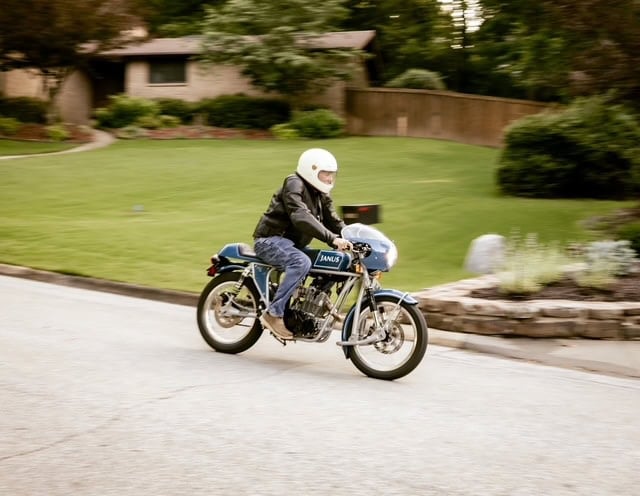

The motorcycle I couldn’t leave alone
I’ve owned a lot of motorcycles over the years. Big ones. Small ones. Fast ones. Expensive ones. Cheap ones. Japanese, British, American, and Italian. Dirt bikes, cruisers, standards, cafe racers, customs. By now I probably ought to know better than to think one more motorcycle is going to be “the one.”
Yet here I am.
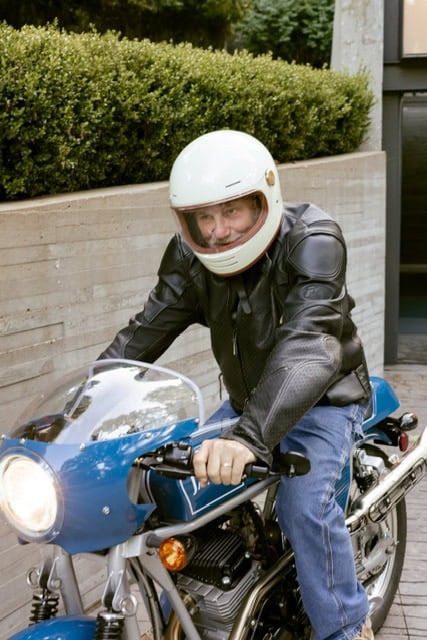
The motorcycle that has me grinning every time I throw a leg over it isn’t the fastest or most expensive bike I’ve ever owned. It isn’t loaded with electronics, multiple riding modes, or a dashboard that looks like the flight deck of a Boeing 787. It’s a Janus Phoenix that started life as a 229 cc motorcycle and gradually became something uniquely my own.
The funny thing is that I liked it before I ever modified it. I ordered my new Phoenix in American Blue with white pinstriping and logos, a silver frame, black seat, low Phoenix handlebars, Gryffin high-mounted exhaust, fork tie-downs, and an engraved anniversary fuel cap. It looked exactly like what I wanted- a lightweight American motorcycle with timeless styling, quality craftsmanship, and just enough personality that people constantly ask about it wherever it goes.
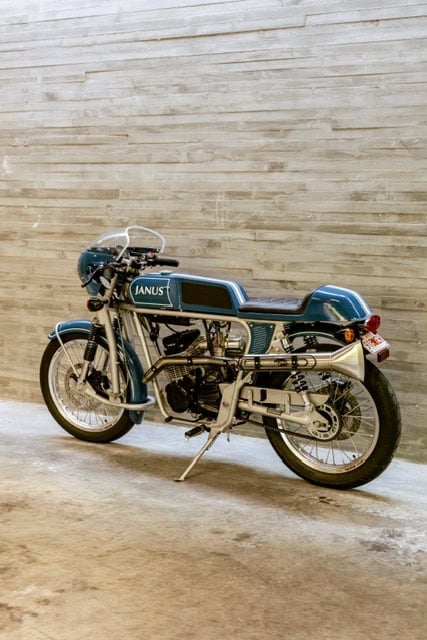
As the COO, a board member, and one of the owners of Janus Motorcycles, I know firsthand why our motorcycles are built the way they are. Every design decision involves balancing performance, reliability, cost, emissions regulations, and manufacturability. I also know something else: one of the great joys of motorcycle ownership is making a machine your own.
So that’s exactly what I did.
Like countless Harley-Davidson, Triumph, BMW, and Ducati owners before me, I couldn’t resist the temptation to personalize a motorcycle I already loved. My goal wasn’t to “fix” anything. It was to explore just how far I could take an already wonderful platform while preserving everything that makes the Phoenix such a delight to ride.
The biggest change was replacing the original engine with a Zongshen CPS300 four-valve overhead-cam single producing about 29 horsepower. Along with the engine came a 32 mm Nibbi carburetor, polished alloy velocity stack, Motocult throttle assembly, a careful dyno tune from Devin at Motocult, and a 43-tooth rear sprocket to make the most of the additional power. The transformation is remarkable!
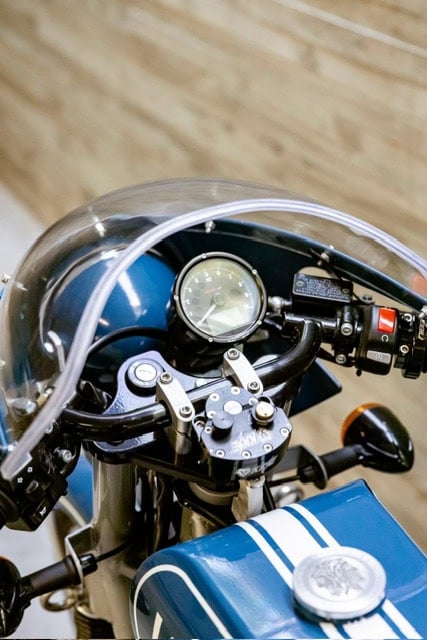
The pleasant, easygoing Phoenix I started with has become a snarling, raucous little beast that absolutely loves to be ridden hard. Crack the throttle open and the front end gets light. The exhaust barks with authority. The engine spins willingly toward redline and pegs the tach at 10,000 rpms, and every acceleration run puts a smile on my face. Yet somehow it never loses the charm that attracted me to the motorcycle in the first place. It simply feels like the Phoenix discovered a wilder side of its personality.
Adding horsepower naturally led to improvements elsewhere. The front suspension now uses 7 mm IKON springs while retaining the stock fork assemblies, and the rear wears 13.5-inch Progressive Suspension air shocks set at about 50 pounds of pressure. Lowering the rear by 1” effectively gives the bike more rake. A Scotts-style adjustable steering damper, mounted with a beautifully fabricated bracket by fellow Janus owner Tom Lathrop, adds stability without dulling the steering. Motocult’s power rear brake conversion gives the bike stronger stopping power, while Shinko 712 tires mounted on 1/4” wider NOS Excel alloy rims provide excellent grip and classic looks.
None of those changes were intended to alter the essential character of the motorcycle. They simply allow the chassis to keep pace with the engine and make the entire package feel more cohesive and confidence inspiring.
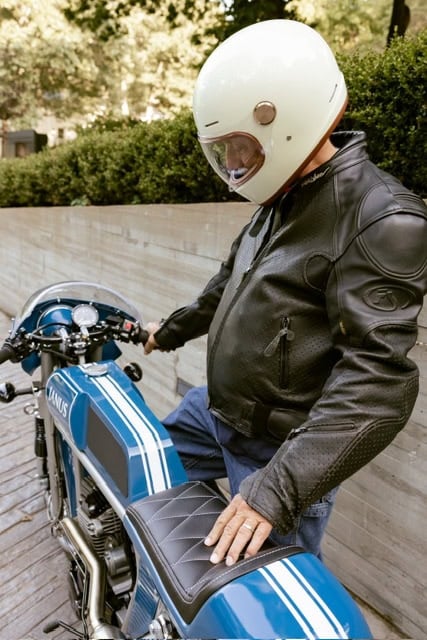
The cosmetic changes were every bit as much fun. I added a café fairing that I painted to match the American Blue tank, along with a Café Racer Garage seat featuring custom diamond-stitched upholstery and a matching rear cowl. Rubber knee pads, a white center stripe, bar-end mounted mirror, enameled American flag emblem, P300 engine badge, and a handful of smaller details completed the look. They’re subtle touches individually, but together they create exactly the motorcycle I had pictured in my mind before I ever picked up a wrench.
People often ask whether Janus should simply build a motorcycle like this from the factory. The answer is more complicated than most people realize. Emissions certification alone makes engine changes enormously slow and expensive for a small-volume manufacturer, and every product decision involves compromises that customers never see. That’s simply the reality of building motorcycles in America today.
Fortunately, none of that prevents owners from putting their own personal stamp on the motorcycles they ride.
Maybe that’s what I appreciate most about Janus motorcycles. They’re complete and satisfying exactly as they leave the factory, yet they’re also honest, mechanical machines that invite personalization. They’re motorcycles you can actually understand, work on, and shape into something that reflects your own tastes.
This one just happens to reflect mine.
I’ve owned motorcycles with two and three times the horsepower. I’ve owned motorcycles costing several times as much. Most of them were objectively faster, more sophisticated, and more technologically advanced. But very few of them were more fun than this Janus.
Modern motorcycles continue to get heavier, more complicated, and increasingly isolated from the rider. They are astonishing feats of engineering, but many of them filter out the very sensations that made many of us fall in love with motorcycling in the first place. You can buy bikes today that have a reverse gear, keychain fob operated trunk, and even airbags. This Phoenix goes in the opposite direction. It weighs next to nothing, talks to you through the handlebars and seat, responds instantly to every input, and rewards an enthusiastic rider far more than an overly cautious one. It doesn’t ask you to scroll through menus or choose a ride mode. It simply asks you to ride.
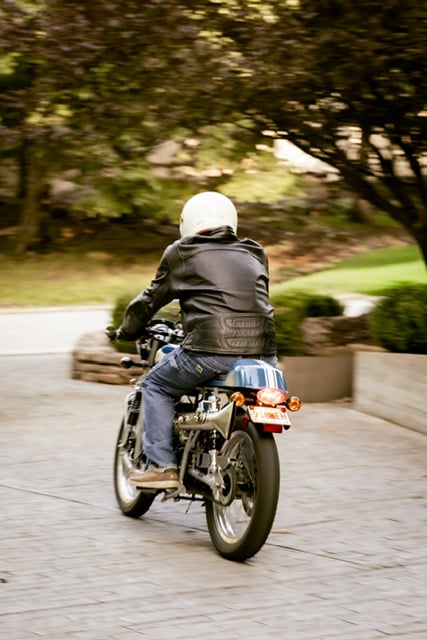
Sometimes improving a motorcycle means adding complexity. This project reminded me that sometimes the greatest improvements come from refining the basics- keeping the bike light, making it a little stronger, dialing in the suspension, and adding just enough personality to make every ride feel like an event.
For me, this Janus Phoenix has become the most enjoyable motorcycle I’ve owned in years. Every excuse to run an errand somehow turns into a longer route home, and every ride ends with the same thought. What am I going to do next to it? I have an oil cooler that I haven’t figured out how to plumb yet, and a larger front disc brake and caliper setup that Tom Lathrop cooked up for it. Those mods, along with a Motocult fishtail exhaust extension, will come next. You can always take it just a little bit farther if you want to!
MZ
For more on Janus’ history and their 2026 line of bikes, click here:





















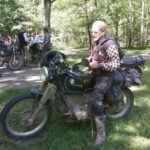



One minor error here. I have owned motorcycles with 6 times the horsepower of this thing. But it is still more fun to ride!